
Chicken breast can be a dry, boring piece of meat if not handled well. But with a few tricks, you can make it juicy and flavorful, even on a weeknight. The secret often lies in how you cook and rest it, not in fancy ingredients.
Why I keep coming back to this chicken method
It’s reliable, forgiving, and endlessly tweakable. The texture and flavor are consistent, making it my go-to for a quick, satisfying meal. Plus, that irresistible sear—nothing beats it.
Breaking down the ingredients for perfect juiciness
- Chicken breasts: Lean, mild, and quick-cooking. Opt for skinless, boneless for ease.
- Salt and pepper: Fundamental for seasoning. Salt also helps retain moisture.
- Oil or butter: High-smoke point oil like canola or avocado. Adds flavor and crispness.
- Herbs and spices: Thyme, rosemary, smoked paprika—whatever adds your personal touch.
- Lemon or acid: Brightens flavors and helps tenderize. Use fresh lemon juice or vinegar.
Tools that make juicy chicken a breeze
- Heavy skillet or cast-iron pan: Provides even heat and a good sear for that crispy exterior.
- Meat thermometer: Ensures you hit the perfect internal temperature—no guesswork.
- Tongs or spatula: Helps flip the chicken gently without piercing it.
- Paper towels: Drying the chicken thoroughly before cooking for even browning.
Step-by-step for a juicy chicken breast every time
Step 1: Start with a brine. Mix water with salt (and a touch of sugar if you like). Submerge chicken breasts for 20-30 minutes. This step keeps the meat tender and helps it stay juicy.
Step 2: Pat the chicken dry thoroughly. Moisture on the surface will cause steaming instead of searing, so really get it dry with paper towels.
Step 3: Season generously with salt, pepper, and your favorite herbs or spices. Don’t skimp—this is where flavor begins.
Step 4: Heat a heavy skillet over medium-high heat (about 200°C/390°F). Add a splash of oil—enough to coat the bottom.
Step 5: Place the chicken in the hot pan. Cook for 4-5 minutes without moving it, until the underside is golden and crisp.
Step 6: Flip the chicken. Cook another 4-5 minutes. Use a meat thermometer; look for 75°C/165°F for perfect doneness.
Step 7: If the chicken browns too fast, lower the heat. If it’s not browning, increase slightly.
Step 8: Remove from heat. Let it rest for 5 minutes before slicing.
Step 9: Slice against the grain. Serve immediately with pan juices or a fresh squeeze of lemon.
Step 10: Resting lets the juices redistribute, avoiding dry bites. Slicing too soon will lose all that moisture.
Cooking checkpoints to ensure juiciness and flavor
- Golden, crisp exterior without burning. Adjust heat as needed.
- Juice runs clear when pierced with a knife—no pink or blood.
- Internal temperature hits 75°C/165°F—use a reliable meat thermometer.
- Rest time is crucial—don’t skip the 5-minute pause before slicing.
Common mistakes and how to fix them
- Cooking by eye or time only.? Use a meat thermometer—guessing leads to dry or undercooked chicken.
- Skipping resting period.? Let the chicken rest—cutting into it immediately causes juices to escape.
- Cooking multiple breasts at once.? Don’t overcrowd the pan—crowding causes steaming, not searing.
- Cooking on too high heat.? Adjust heat as needed—if it’s burning outside, turn it down.
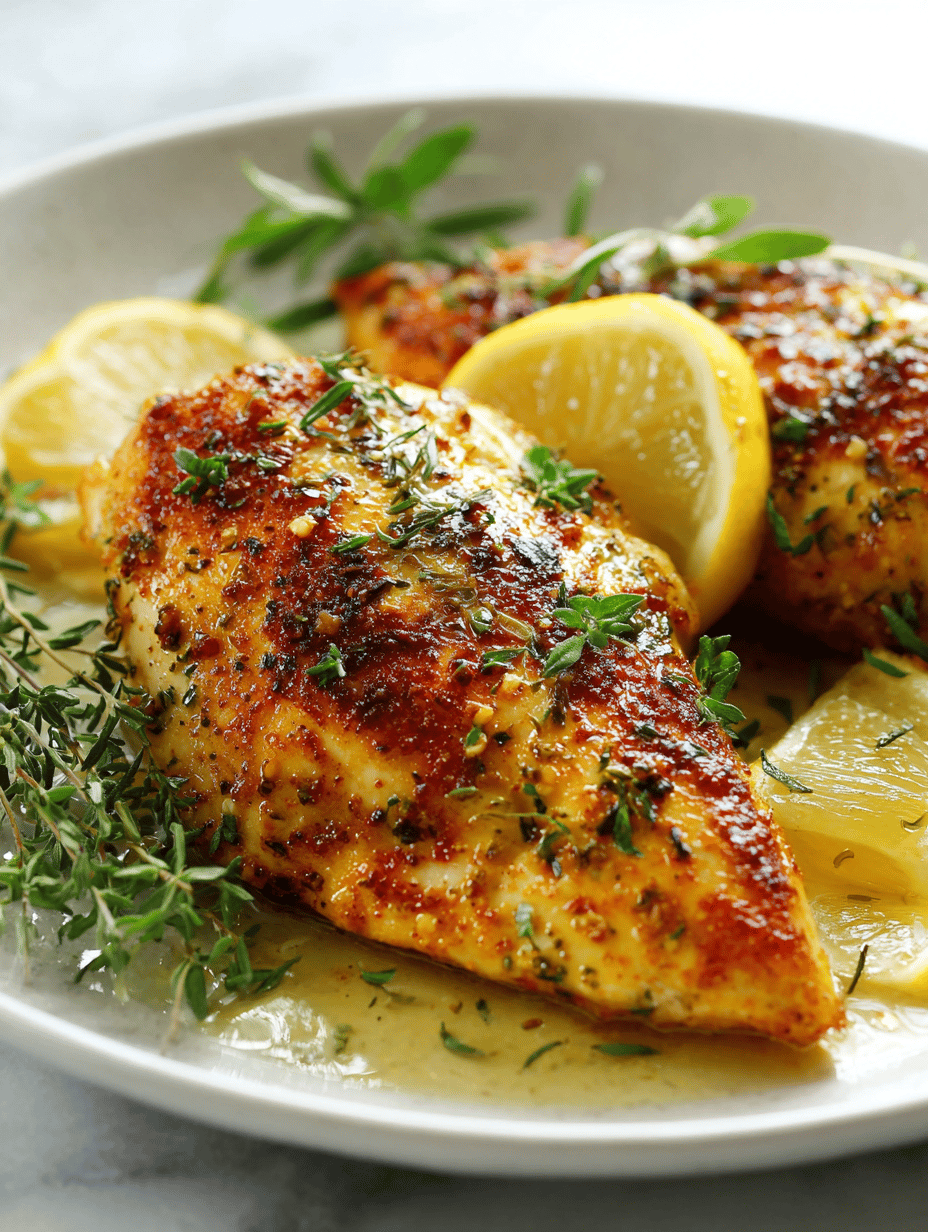
Juicy Pan-Seared Chicken Breast
Ingredients
Equipment
Method
- Start by patting the chicken breasts dry thoroughly with paper towels to ensure a good sear.
- Season both sides generously with salt, pepper, and thyme, pressing the spices into the meat for better adhesion.
- Heat a heavy skillet over medium-high heat until it’s hot and fragrant, about 2 minutes. Add the olive oil and swirl to coat the bottom.
- Place the chicken breasts in the skillet gently, listening for a sizzling sound. Let them cook undisturbed for 4-5 minutes, until the underside turns a deep golden brown and feels firm when pressed.
- Flip the chicken breasts using tongs or a spatula, then cook the other side for another 4-5 minutes, until similarly golden and cooked through, checking that the internal temperature reaches 75°C (165°F) with a meat thermometer.
- Once cooked, remove the chicken from the pan and transfer to a plate. Let it rest for 5 minutes; this helps the juices redistribute and keeps the meat juicy.
- After resting, slice the chicken against the grain into thick strips or medallions. Squeeze fresh lemon juice over the slices for a bright finishing touch.
- Serve immediately, enjoying the crispy exterior and tender, juicy interior with a drizzle of pan juices or additional lemon if desired.