
Chicken soup is often seen as a comfort food, but I’ve come to realize it’s also a craft. It’s about patience, layering flavors, and understanding that the best broth takes time. This recipe is my quiet rebellion against rushed, store-bought versions—because good soup demands respect.
Why This Chicken Soup Keeps Calling Me Back
It’s simple, honest, and deeply satisfying. When life feels chaotic, this soup offers a moment of calm. The aroma alone is enough to slow down a busy day. Plus, I love how flexible it is—add noodles, rice, or keep it clean and clear. It’s a blank canvas for comfort.
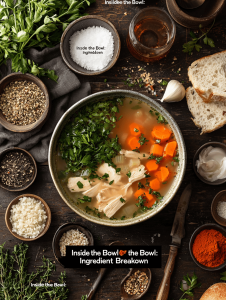
Inside the Bowl: Ingredient Breakdown
- Whole chicken or chicken parts: The soul of the soup. Use a whole bird for richer flavor, or parts if you want quicker prep.
- Onion: Adds sweetness and depth. No need to peel, just rinse—peels help flavor the broth.
- Carrots: Bring a gentle sweetness and color. Slice thick for longer cook time.
- Celery stalks: Offers a fresh, slightly bitter note. Slice for even cooking.
- Fresh herbs (thyme, parsley, bay leaves): Impart aroma and complexity. Tie herbs in a bundle for easy removal.
- Lemon juice: Brightens everything up, a splash at the end lifts the broth.
- Salt and pepper: Season gradually—adjust as needed for depth and balance.
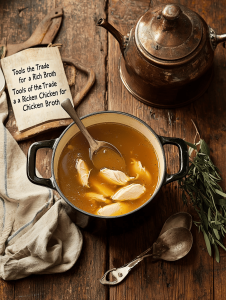
Tools of the Trade for a Rich Chicken Broth
- Large stockpot: Houses the ingredients and allows gentle simmering.
- Skimmer or slotted spoon: Removes foam and impurities for a clearer broth.
- Fine-mesh strainer: Strains the broth for clarity.
- Sharp knife: Prepares chicken and vegetables with precision.
- Cutting board: Keeps your workspace tidy and safe.
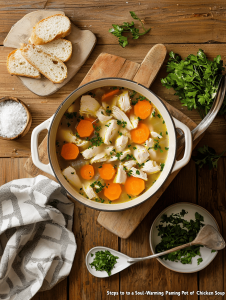
Steps to a Soul-Warming Pot of Chicken Soup
Step 1: Start by gathering a whole chicken or chicken parts—whatever you have. Rinse and pat dry.
Step 2: In a large pot, add the chicken, a whole onion (no peeling needed), carrots, celery, and a bunch of herbs—thyme, parsley, bay leaves.
Step 3: Cover everything with cold water—about 3 liters for a standard pot—and bring to a gentle simmer over medium heat.
Step 4: Skim off any foam that rises to the surface in the first 15 minutes, then reduce heat to low so it barely bubbles.
Step 5: Cook gently for about 1.5 to 2 hours, until the chicken is tender and the broth is rich and clear.
Step 6: Remove the chicken, strain the broth, and discard the vegetables and herbs—unless you want to mash the carrots into the soup.
Step 7: Shred the chicken, discarding the skin and bones. Return the meat to the broth.
Step 8: Add salt, pepper, and lemon juice to taste, then serve hot with fresh bread.
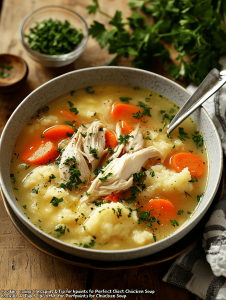
Cooking Checkpoints & Tips for Perfect Chicken Soup
- Broth should be clear, not cloudy—skimming foam early helps achieve this.
- Chicken is tender when it easily pulls apart—test with a fork after 1.5 hours.
- Vegetables should be soft but not mushy—add carrots and celery in the first hour.
- Season gradually—add salt and acid near the end to balance flavors.
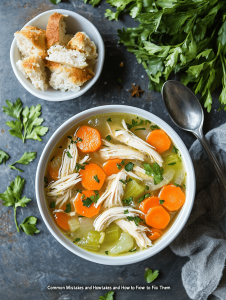
Common Mistakes and How to Fix Them
- Not skimming foam, leading to a murky broth.? Skimming foam early helps keep broth clear, avoid cloudy soup.
- Boiling vigorously, toughening the meat.? Cook chicken gently—boiling too hard makes it tough.
- Over-salting early, making broth too salty.? Add salt and lemon at the end to balance flavors.
- Adding all ingredients at once, resulting in overcooked veggies.? Overcooking vegetables can turn them mushy—add later if needed.
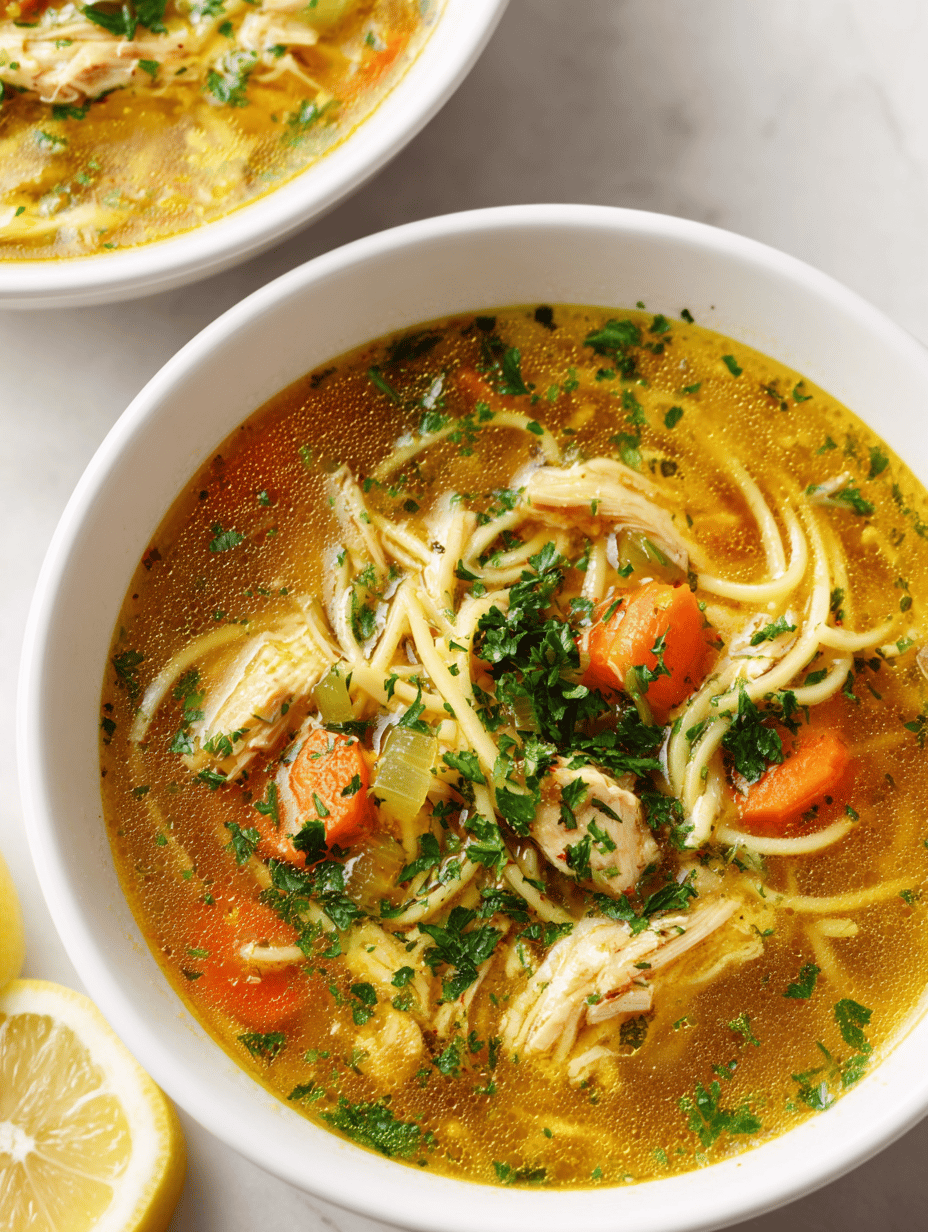
Homemade Chicken Soup
Ingredients
Equipment
Method
- Place the rinsed chicken or chicken parts into a large stockpot and cover with cold water, about 3 liters.
- Add the whole onion (no need to peel), sliced carrots, sliced celery, tied herbs (thyme, parsley, bay leaves) into the pot.
- Bring the water to a gentle simmer over medium heat, listening for a steady, soft bubbling.
- Skim off any foam that rises to the surface with a slotted spoon, especially in the first 15 minutes, to keep the broth clear.
- Reduce the heat to low so the broth barely bubbles and let it simmer gently for about 1.5 to 2 hours, until the chicken is tender and the broth is flavorful and clear.
- Remove the chicken from the broth and set aside to cool slightly.
- Strain the broth through a fine-mesh strainer into another pot or large bowl, discarding the vegetables and herb bundle.
- While the broth is still warm, shred the chicken meat, discarding the skin and bones.
- Return the shredded chicken to the strained broth and warm it gently over low heat.
- Season the soup gradually with salt and freshly ground black pepper, tasting as you go.
- Just before serving, stir in lemon juice to brighten the flavors.
- Serve hot, optionally with bread or noodles for a heartier meal, and enjoy the comforting aroma and tender, flavorful chicken.