
Chicken soup feels like a quiet ritual, especially when made from scratch. It’s a way to turn humble ingredients into something nourishing and full of history. No matter how many times I make it, each batch feels like a small victory.
Why I Keep Coming Back to This Chicken Soup
This soup reminds me of childhood kitchens, of simple days and shared stories. It’s a pot I turn to when I need comfort that’s honest and unpretentious. The slow simmer teaches patience, and every bowl feels like a small act of love.
Breaking Down the Ingredients
- Chicken bones: I use leftover carcasses or wings—lots of flavor and marrow. Swap in turkey bones when in season.: They form the backbone of the broth, releasing rich gelatin and deep flavor.
- Carrots: I prefer organic, sweet carrots, sliced unevenly for rustic charm. Use parsnips for a sweeter, earthier touch.: They add a natural sweetness and color to the broth.
- Celery: Juicy, fresh celery leaves give a grassy brightness. Dried celery seed can substitute in a pinch.: It adds a fresh, aromatic note that balances richness.
- Onions: Yellow onions bring sweetness; red onions add a slight bite. Shallots can add a milder, nuanced flavor.: They form the aromatic base that makes the broth smell inviting.
- Herbs: Bay leaves, thyme, and parsley—fresh if possible. Dried herbs work, but fresh makes a noticeable difference.: They infuse the broth with fragrant, earthy tones.
- Lemon: A squeeze at the end brightens everything. Lime can add a different citrus punch.: It lifts the broth, giving it a fresh, zingy finish.
Tools and Equipment for a Perfect Chicken Soup
- Large stockpot: To simmer bones and vegetables evenly.
- Strainer: To clear out bones and veggie chunks, leaving a pristine broth.
- Sharp chef’s knife: To chop vegetables uniformly and quickly.
- Ladle: To serve the broth without disturbing the solids.
- Tongs: To handle hot chicken pieces safely.
Step-by-Step to a Soulful Chicken Soup
Step 1: Start by gathering bones—chicken carcasses or leftover wings—to build a rich, deep base. Simmer them low and slow for at least 2 hours, letting the marrow release its secrets.
Step 2: While the broth bubbles, prep your vegetables—carrots, celery, onion—cutting them into uneven chunks for rustic charm. Toss these into the pot after the first hour, so they soften but keep some bite.
Step 3: Once the stock smells deeply savory—like a warm hug—strain out the bones and veggies, leaving behind a clear, golden liquid. Taste and adjust salt, maybe a dash of lemon for brightness.
Step 4: Add shredded chicken (preferably leftover roasted or poached). Let it simmer gently for another 10 minutes, until everything is tender and flavors meld. Serve hot, with crusty bread or a sprinkle of fresh herbs.
Cooking Checkpoints and Tips for Success
- Broth should be clear, not cloudy—skimming foam helps with clarity.
- Vegetables should hold some texture, not turn to mush—keep an eye on timing.
- Chicken should be shredded easily, with no pink remaining—use a thermometer if unsure.
- Taste as you go—adjust salt and acidity to balance the flavors.
Common Mistakes and How to Fix Them
- Forget to skim foam during simmering.? Skim foam regularly to keep broth clear.
- Overcooking veggies into a pulp.? Cook vegetables gently to avoid mush.
- Adding too much salt too early.? Taste and adjust seasoning at the end.
- Serving undercooked chicken.? Ensure chicken is cooked thoroughly.
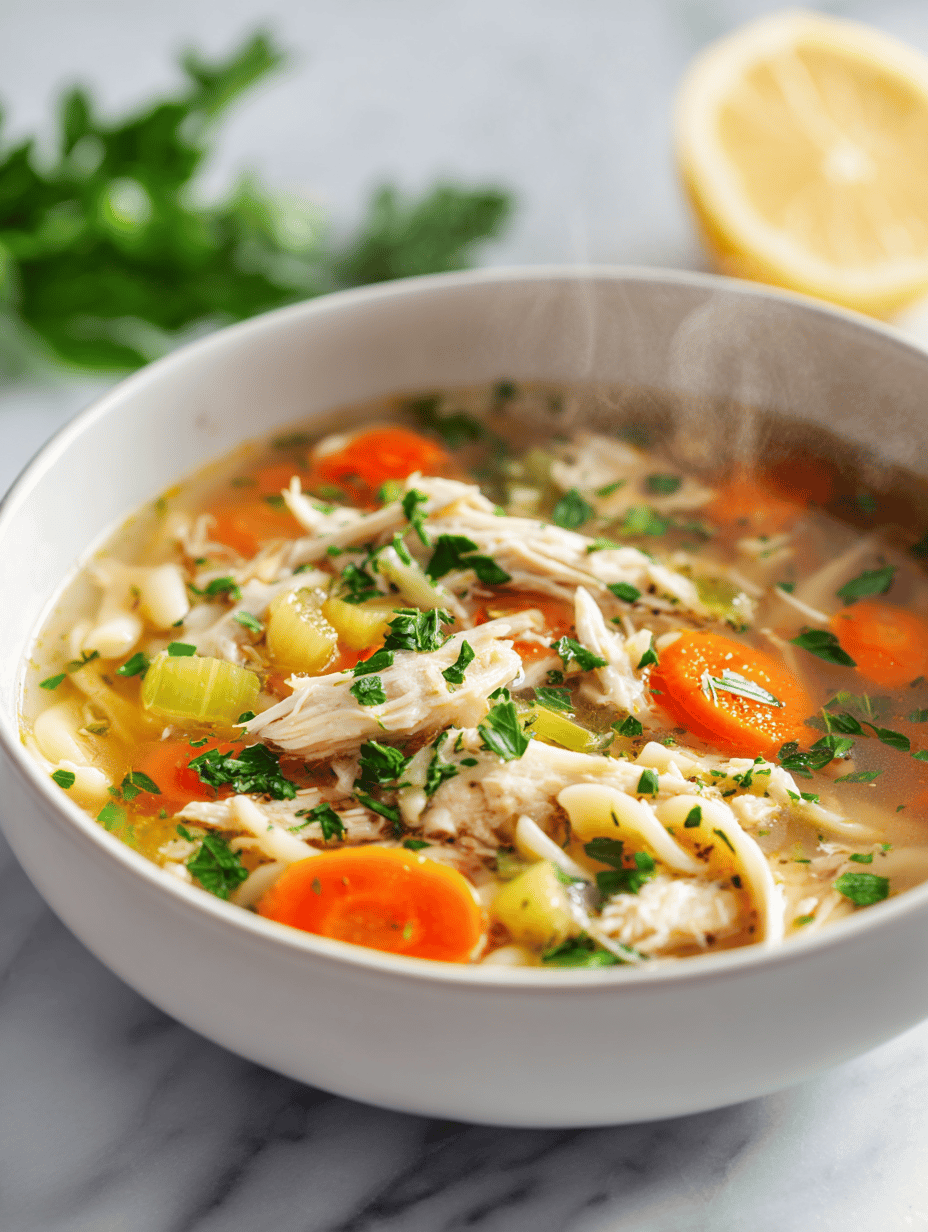
Homemade Chicken Soup
Ingredients
Equipment
Method
- Place the chicken bones in a large stockpot and cover with cold water. Bring to a gentle simmer over medium-low heat, skimming off any foam that rises to the surface. Let it simmer slowly for at least 2 hours; this deepens the flavor and releases gelatin, making the broth rich and silky.
- While the broth simmers, peel and chop the carrots into uneven chunks, and dice the onion. Slice the celery stalks, including some leaves for brightness. These vegetables will add flavor and color to the broth.
- After the broth has simmered for 2 hours, turn off the heat and carefully strain out the bones, vegetables, and any solids. Pour the clear broth back into the pot, discarding the solids. This step ensures a pristine, golden liquid.
- Bring the strained broth back to a gentle simmer. Add the chopped carrots, celery, and diced onion. Let them cook for about 20-25 minutes until they are tender but still hold some texture, filling your kitchen with a savory aroma.

- Stir in the bay leaves and thyme, allowing the herbs to infuse the broth with fragrant, earthy notes. Continue simmering for another 10 minutes, letting the flavors meld beautifully.
- Remove the bay leaves and taste the broth, adjusting seasoning with salt and pepper as needed. Squeeze fresh lemon juice into the pot to brighten the flavors and add a zingy finish.

- Add the shredded cooked chicken to the pot, allowing it to warm through gently for about 10 minutes. This will bring hearty, tender chunks of chicken into the flavorful broth.
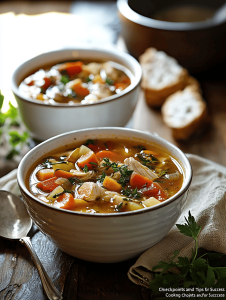
- Serve the soup hot, garnished with chopped parsley for freshness. Pair it with crusty bread or enjoy it on its own for a comforting, rustic meal.